Ukraine’s experience during the full-scale Russian invasion illustrates the complex interplay between necessity and constraint in wartime governance. HROMADA member Oleksii Kolesnykov analyses the developments and draws important lessons from them.
Wars and emergencies place extraordinary pressure on political systems, necessitating rapid decision-making, centralised coordination, and an expansion of executive authority. From both historical and theoretical perspectives, such shifts are neither unexpected nor inherently problematic. From Schmitt’s notion of the “state of exception” to contemporary emergency governance literature, political theory recognises that crisis conditions require a degree of institutional flexibility that may temporarily alter the ordinary distribution of powers.
However, the crisis-related centralisation of authority raises concerns regarding the durability of constitutional constraints and the preservation of democratic governance. While emergency powers may be indispensable, their exercise must remain embedded within a framework that safeguards the constitutional order and prevents its erosion.
In this regard, Ukraine’s experience during the full-scale Russian invasion is particularly instructive. It represents a relatively rare contemporary case of a state with a comparatively high level of democratic development facing a large-scale interstate war on its own territory. As such, it offers valuable empirical insights into how democratic institutions adapt under extreme conditions, and what risks emerge when the balance between necessity and constitutional restraint is tested.
Separation of Powers in Ukraine: Old Problems, New Context
The political principle of the separation of powers has been central to democratic governance since its articulation by Montesquieu in the mid-18th century and first implementation in the U.S. Constitution. Its purpose is straightforward: to prevent the concentration of authority by distributing power across branches of government and embedding checks and balances. In practice, however, its implementation varies across states, reflecting differences in political systems and their institutional configurations.
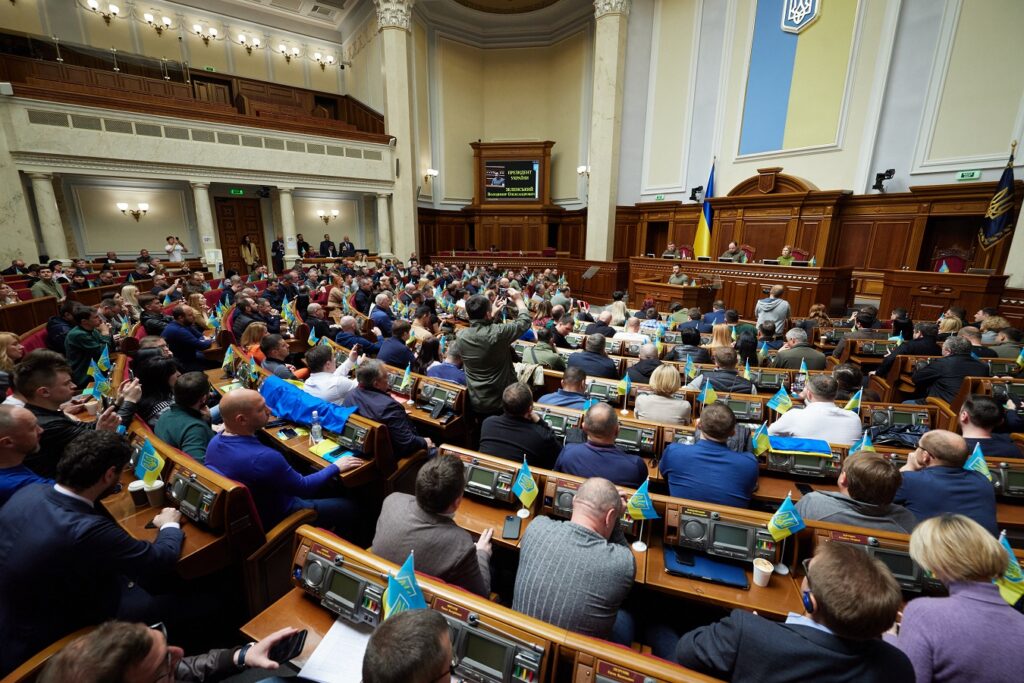
In Ukraine, this principle is formally embedded in a semi-presidential system. Elected by popular vote, the President serves as the head of state and shares executive power with the Cabinet of Ministers, although the Ukrainian Constitution does not formally define the President as part of the executive branch. Legislative authority is vested in the unicameral Verkhovna Rada, which also plays the key role in government formation and oversight. As the highest executive body, the Cabinet of Ministers is responsible to the President but, at the same time, is subject to the control of the Verkhovna Rada and accountable only to it. This subordination of the cabinet to parliamentary rather than presidential authority allows us to qualify Ukraine as a premier–presidential system.
In its formal design, this model is intended to balance power by constraining presidential influence, particularly in domestic affairs. In practice, however, the system has proven far more fluid. This fluidity is further reinforced by Ukraine’s repeated institutional shifts between different variants of semi-presidentialism: from a presidential–parliamentary model (1996–2005; 2010–2014) to a premier–presidential one (2005–2010; and again since 2014). These oscillations have contributed to an unstable distribution of authority, increasing the importance of political context and informal practices in determining how power is actually exercised.
As a result, presidential influence in Ukraine has frequently extended beyond constitutional limits, shaped by political alignments and informal power structures. Moreover, ordinary legislation has, at times, expanded presidential competences beyond what the Constitution envisages. The outcome is a recurring pattern in which Ukrainian presidents exercise authority beyond their formal mandate.
Importantly, this dynamic appears largely independent of the formal institutional model in place. In practice, the presidency has consistently served as the central institution in Ukraine’s political system, as confirmed by recent research and reflected in public opinion, where the President is widely regarded as the primary locus of political power.
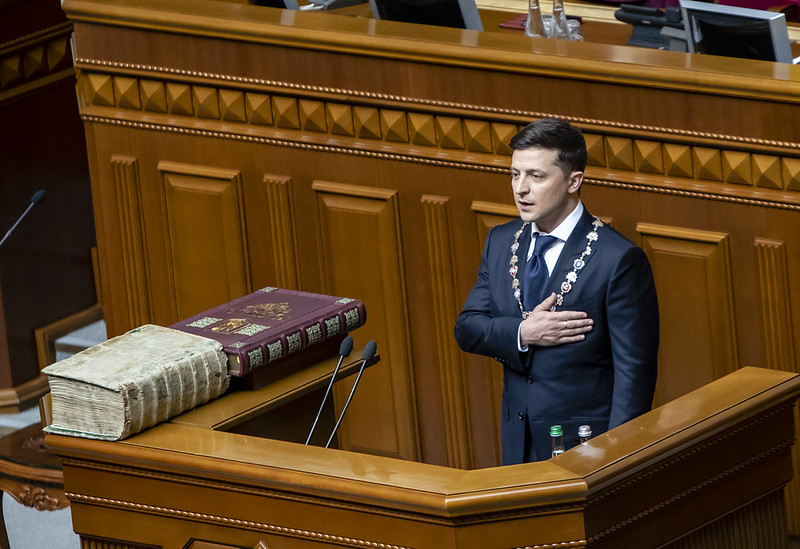
This dynamic was already visible before the full-scale war and became apparent regarding Volodymyr Zelensky just as he entered the office in 2019. He benefited from unprecedented public support, obtaining 73% of the vote and enjoying approximately 80% public trust at the outset of his presidency. This political capital was further consolidated by his party, Servant of the People, which secured a single-party majority.
Crucially, many members of this parliamentary faction were political newcomers. Their electoral success was closely tied to Zelensky’s personal popularity rather than to their own merits. This reliance on Zelensky’s popularity to secure their seats created a high degree of political dependence on the President and, in turn, gave him substantial informal leverage over both parliament and the government.
This growing influence became visible early on. Zelensky’s decision to dissolve the parliament on the day of his inauguration — though later upheld by the Constitutional Court of Ukraine — was widely seen as legally controversial. It was followed by the introduction of the so-called “turbo mode” in the Verkhovna Rada, under which legislation was introduced and adopted at high speed, often with limited deliberation, with MPs voting the bills through almost automatically.
Tensions with the judiciary further illustrated this trend. During the 2020–2021 confrontation with the Constitutional Court, Zelensky took a series of legally contentious steps, including an attempt to annul decrees appointing two Constitutional Court judges despite the lack of a clear legal basis for such action. At the same time, he exercised decisive influence over key government appointments and increasingly relied on informal practices, such as issuing direct instructions to the prime minister and ministers.
By 2021, amid declining public support and persistent dysfunction within the judicial system, the National Security and Defence Council (RNBOU) assumed an increasingly prominent role in decision-making. Although formally advisory, it took on the power to impose sanctions on oligarchs, Russian-linked entities, and other actors deemed threats to national security. This development further illustrates how auxiliary institutions can evolve into the tools of executive authority in a legally dubious manner.
Shift in Authority During War
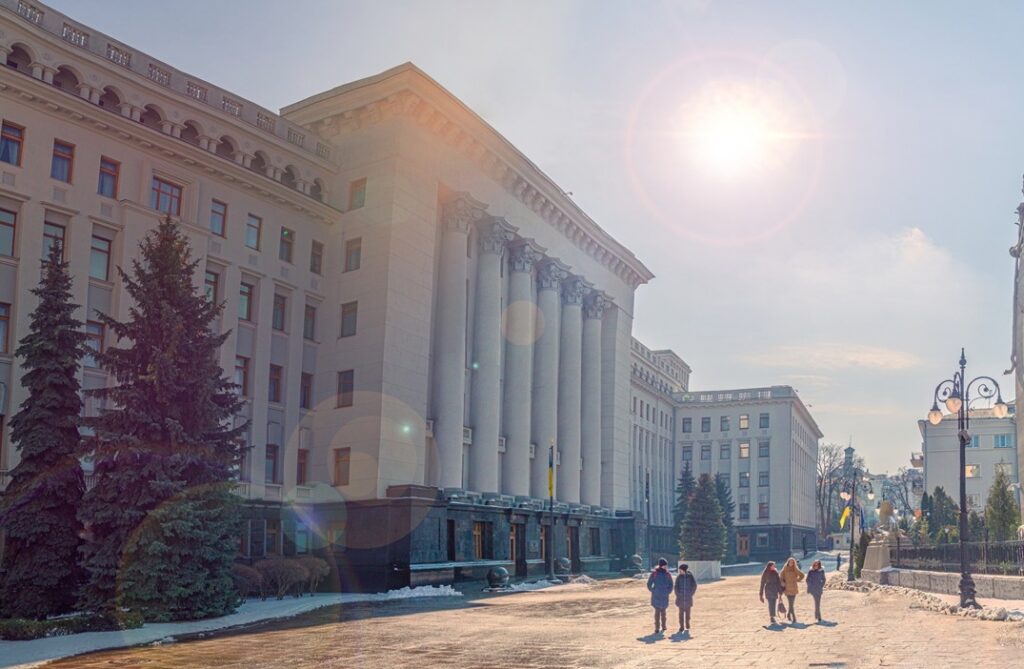
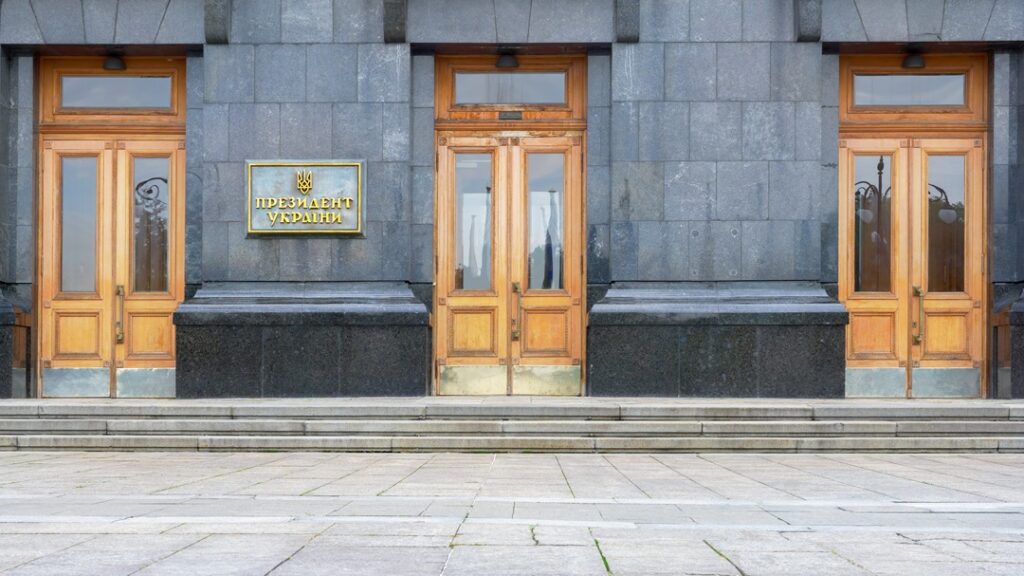
The full-scale invasion accelerated and deepened these trends. Presidential authority expanded further, with the Office of the President of Ukraine (OPU) becoming a central actor.
This development, however, did not appear out of nowhere. Presidential administrations in Ukraine have long tended to expand their influence beyond their formal, technical role. This body is officially designed to support the President, not to make policy. In practice, it has repeatedly moved beyond this function. This was particularly evident during the presidencies of Leonid Kuchma and Viktor Yanukovych, when the presidential administration evolved into a highly influential political actor. Nevertheless, even under other presidents, it has at times assumed powers beyond its formal functions and mandate.
Following the start of the full-scale invasion, the OPU assumed an expanding range of functions, increasingly encroaching on the government’s and ministries’ powers.
A particularly illustrative example is the role of Andriy Yermak, former Head of the OPU, whose activities have, for instance, extended deeply into foreign policy, formally the domain of the Ministry of Foreign Affairs. He has been centrally involved in key international initiatives, including security guarantee frameworks, Euro–Atlantic integration efforts, the “Grain from Ukraine” initiative, prisoner exchanges, and the organisation of high-level diplomatic events such as the peace summit in Switzerland. Yermak has also accompanied President Zelensky at major international engagements, conducted crucial negotiations, and even participated directly in delegations related to Ukraine’s accession to the European Union.

At the same time, OPU advisers have also taken on prominent public and political roles. Mykhailo Podolyak has become a visible voice on a wide range of issues, including military matters, despite these formally falling under the competence of the Ministry of Defence and the General Staff. Earlier in the war, Oleksiy Arestovych played a similar role before his dismissal following controversial statements.
The OPU has also increasingly intruded into sectoral policies that are entirely within the government’s domain. For instance, Rostyslav Shurma, a former deputy to Yermak, has led initiatives on economic issues, fiscal policy, infrastructure, and the energy sector. He spearheaded the development of the radical “10–10–10” tax reform (which was ultimately not approved), was directly involved in drafting the Energy Strategy of Ukraine until 2050, and coordinated the establishment of centralised state corporations, including Forests of Ukraine, the land bank, and a single electricity trader.
Even more striking was the creation of economic initiatives under presidential auspices – such as the Council for Entrepreneurship Support and the “Made in Ukraine” platform – despite the absence of formal presidential competencies in these areas.
A separate issue concerns the President’s and his entourage’s roles in government shuffles. Several journalistic investigations have revealed that the OPU leadership, notably Andriy Yermak, has had significant influence over cabinet appointments and dismissals.
Zelensky has also publicly commented on various governmental appointments, suggesting a high degree of personal involvement. A notable example is the dismissal of the cabinet led by Denys Shmyhal, which had operated since 2019 without an approved government programme, making any assessment of its performance difficult. Moreover, no formal parliamentary evaluation or reporting process appears to have taken place.
The subsequent appointment of Svyrydenko’s government further illustrates this pattern. Based on public statements and the sequence of events, Zelensky seems to have played a decisive role in its formation, while the issue was not properly deliberated within the pro-presidential parliamentary faction. Such practices raise serious concerns regarding their compatibility with constitutional procedures.
Taken together, these developments point to a broader pattern: the increasing centralisation of authority within the presidential orbit and the growing importance of informal governance mechanisms that blur the boundaries of constitutionally defined powers.
Civil Society as a Main Counterbalance
Under these circumstances, civil society emerged as a key actor in safeguarding democratic resilience and preventing democratic erosion in Ukraine. Traditionally vibrant and dynamic, Ukrainian civil society has played a crucial role in supporting democratic institutions and holding public authorities accountable.
Numerous civil society organisations, independent media outlets, and individual activists consistently raised concerns about the concentration of power, even before the full-scale Russian invasion. As these concerns became increasingly acute, civil society assumed an important watchdog role, exerting public pressure on decision-makers and helping halt or reverse some negative developments.
A prominent example was the mass protests of July 2025, known as the “Cardboard Maidan”. Following the Verkhovna Rada’s adoption of legislation limiting the powers of anti-corruption institutions, thousands of citizens across the country took to the streets in protest. The scale of public mobilisation compelled the authorities to reconsider their position. As a result, the day after the law was adopted, President Zelensky submitted a new bill reversing the controversial amendments.
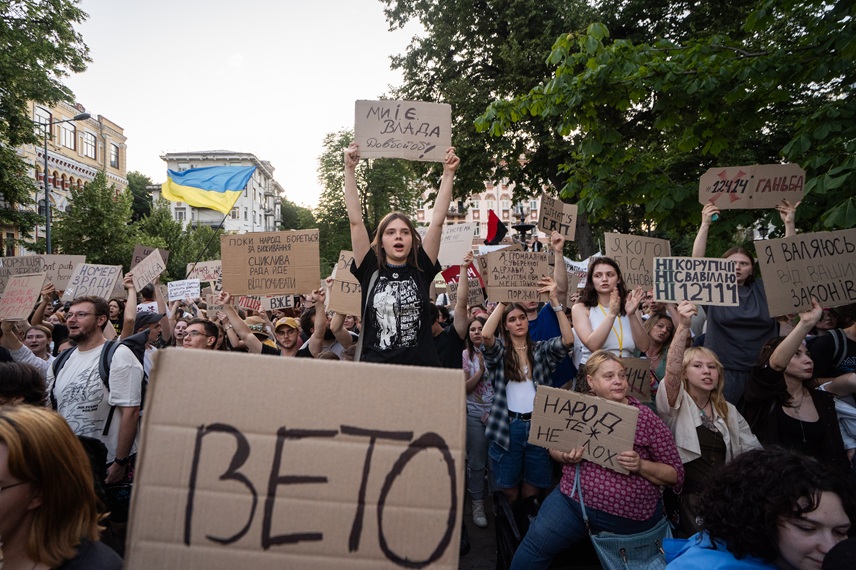
Another example concerns the eventual dismissal of Andriy Yermak from his position, a demand long advocated by segments of civil society. While this development was also influenced by political factors – including declining support within parts of the presidential party, strained perceptions among international partners, particularly in the United States, and Yermak’s growing political toxicity – it is unlikely that such an outcome would have occurred without sustained pressure from civil society actors.
Thus, Ukrainian civil society served as the primary counterweight to the growing concentration of power around the presidency. While recognising the necessity of enhanced executive authority during wartime, it demonstrated that there are democratic red lines that cannot be crossed. This highlights Ukraine’s capacity to maintain democratic resilience amid prolonged military conflict.
Conclusion
The Ukrainian case illustrates the complex interplay between necessity and constraint in wartime governance. While the concentration of executive authority may be functionally justified in the face of external aggression, it should not undermine the foundational principles of constitutional democracy.
The emergence of the Office of the President as a de facto decision-making centre highlights the risks associated with informal institutionalisation and legal ambiguity. Addressing these challenges requires the development of robust legal frameworks, the preservation of accountability mechanisms, and a clear commitment to the temporary nature of emergency powers.
In this regard, the Ukrainian experience offers an important lesson. Although a shift of authority towards the executive branch during war and emergencies is both common and necessary, such authority should be concentrated within constitutionally defined bodies — primarily the government — rather than in auxiliary institutions such as the OPU or the Security Council.
Another important lesson concerns the role of Ukrainian civil society in safeguarding democratic governance and preventing excessive concentration of power. The Ukrainian experience demonstrates that a strong civil society can serve as a crucial counterbalance to executive authority, helping preserve democratic resilience even in crisis and emergency.
At the same time, the nature of the relationship between the President and the government under crisis conditions, as well as the configuration of their emergency powers, depends on the specific model of semi-presidentialism in each country. This configuration may involve concentrating emergency powers within the government, dividing powers between the President and the government, or subordinating the government to the President. However, a detailed analysis of these configurations falls beyond the scope of this discussion and requires a separate examination.