This case study, presented by Oleksandra Cherednichenko and Eugenija Kovaliova, is based on the practical experience of implementing an entrepreneurship training programme by the Ukreate Hub for Ukrainian women in Lithuania.
Although the war-induced migration of Ukrainians differs significantly from other migration flows to Europe in terms of demographic profile, public reception and pre-existing networks, the Lithuanian case offers important lessons for other host countries seeking to improve the integration of displaced Ukrainians into their labour markets. This overview provides an insight into and analysis of an entrepreneurship training programme conducted by the Ukreate Hub, a centre for Ukrainians based in Vilnius, Lithuania.
Ukrainian post-war migration to Lithuania
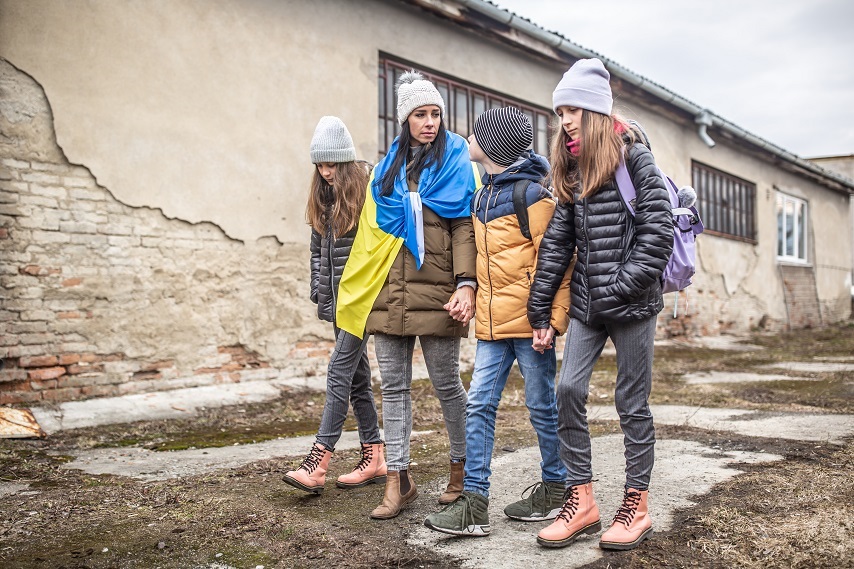
Since the beginning of Russia’s full-scale invasion of Ukraine, Lithuania, due to its geographical and cultural proximity, has become one of the primary destinations for Ukrainians fleeing the war. Since February 2022, over 100,200 Ukrainians have claimed temporary protection status in Lithuania. According to data from the Ministry of Internal Affairs of the Republic of Lithuania as of 1 October 2025, 77,351 Ukrainian citizens hold residence permits in the Republic of Lithuania, and 49,129 persons have been granted temporary protection.[1]
According to available statistics, approximately 46,000 displaced Ukrainians of working age (16–65) currently reside in Lithuania, representing about 55% of all Ukrainians granted temporary protection.
Women constitute a clear majority within this working-age population: more than 34,700 individuals, or roughly 75%. As a result, women of working age account for 40.9% of the total Ukrainian population living in Lithuania.
This gender composition is significant. The majority of these women arrived alone or with children, often bearing the dual responsibility of breadwinning and caregiving in a foreign environment.
Integration into the Lithuanian labour market: general overview
At first glance, Lithuania’s integration outcomes appear impressive. More than 24,000 Ukrainians have been employed in Lithuania under labour contracts since the beginning of the war, roughly half of all Ukrainians of working age who have come to Lithuania. In total, since the beginning of the war, the Public Employment Service (Užimtumo tarnyba, PES), the authority responsible for job placement and labour market integration measures, has helped about 12,700 Ukrainians to find work, and the PES currently has another 1,900 jobs open to Ukrainians. By March 2023, Ukrainians had contributed over €58 million in taxes to the Lithuanian state budget, with €13 million collected in the first two months of 2023 alone. The contribution has continued to grow: Ukrainians paid €45 million in taxes in 2022, €95 million in 2023 and €65.2 million in the first seven months of 2024 alone, 25% more than in the same period the previous year.
According to a recent survey conducted by the International Organization for Migration (IOM) in Lithuania, around 70% of Ukrainians residing in the country are economically active, including those working under labour contracts, as self-employed individuals or in short-term positions. Overall, Ukrainians account for approximately 62% of all refugees currently employed in Lithuania.
IOM Lithuania highlights that the employment rate of Ukrainians in Lithuania is significantly higher than in many other European countries. According to IOM data, around 62% of war-displaced Ukrainians of working age residing in Lithuania are employed, compared to employment rates below 20% among Ukrainian refugees in countries such as Germany, Finland, and Spain.
Several factors have contributed to Lithuania’s comparatively high employment rate among Ukrainians. The widespread understanding of Russian facilitates communication between refugees and employers. Moreover, registration centres that received the largest inflow of arrivals provided comprehensive, integrated services — from administrative registration to access to childcare — helping newcomers resolve several challenges simultaneously. Many Ukrainians also benefited from family-based support and guidance, which helped them navigate Lithuania’s legal, employment and healthcare systems more effectively.
The same IOM study notes that Ukrainians demonstrate a strong entrepreneurial spirit, with around 15% creating their own jobs through self-employment or small business activities.
The capital Vilnius is the most attractive employment location: every third Ukrainian is employed there.
However, a deeper look reveals structural challenges. Statistics show that only 8% of Ukrainian migrants in Lithuania work in highly skilled positions. They work as business and administration specialists (logistics and sales managers), health care specialists (doctors, nurses, veterinarians), training specialists, IT specialists, physical engineering specialists and legal, social and cultural specialists. In comparison, 25% are employed in unskilled or low-skilled jobs as office and hotel cleaners, kitchen helpers and packers, agricultural and forestry workers, food preparation workers and support workers.
Generally, the plurality of Ukrainians interviewed by IOM for the Displacement Tracking Matrix (DTM) report that they are neither satisfied nor dissatisfied with their employment (46%), while 39% report being somewhat or very satisfied.
Challenges faced by Ukrainian women in integration into the labour market
While the employment situation of Ukrainians in Lithuania seems comparatively very good, it does not mean that Ukrainians, particularly women, face no challenges. According to PES statistics, the majority of registered unemployed Ukrainians are women aged 30–49.
According to the data collected by IOM for the DTM, the main challenge faced by surveyed Ukrainians is financial stability (25%). Secure employment is a key means to financial stability; therefore, it is not surprising that 19% of respondents cite employment opportunities as their primary challenge. Obstacles to getting employed include a lack of knowledge of the local language, family and care duties (one or more dependants requiring care), health issues, discrimination and a lack of information. There are also cases of skills and job mismatches that Ukreate Hub has observed within its community (350 members); however, an in-depth study has not yet been conducted. The existence of a mismatch between skills and jobs is indicated in a report by the European Migration Network (EMN) and the OECD, which contributes to the loss of professional identity by displaced Ukrainians, on top of other traumatic experiences faced due to war and forced migration.
Gender-sensitive entrepreneurship training: The Ukreate Hub case
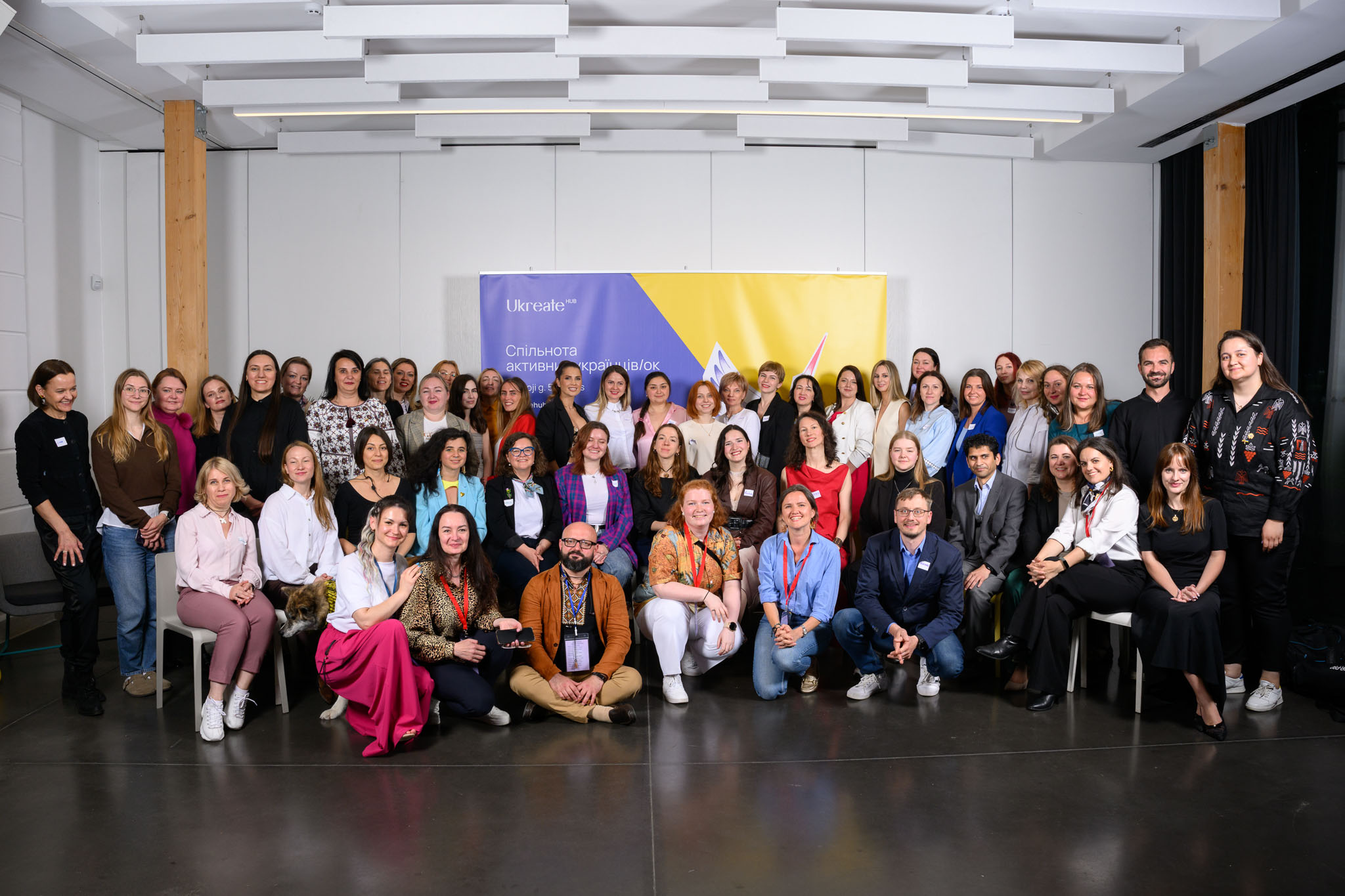
Ukreate Hub is a Vilnius-based competence centre dedicated to displaced Ukrainians in Lithuania, equipping them with the knowledge, skills, networks and other tools to unleash their potential for Ukraine’s future. Ukreate Hub is an initiative of the Open Lithuania Foundation (OLF), whose primary focus is democracy, human rights, the rule of law and European values. OLF’s vision for Ukreate Hub is to foster an active, vibrant Ukrainian community of leaders. Strengthening the professional capacities of Ukrainian women has been one of the Ukreate Hub’s thematic goals since its inception in autumn 2022.
Recognising that many Ukreate Hub community members face challenges in integrating successfully into the labour market, entrepreneurship training was considered a solution to several of the obstacles these women face.
The majority of women who applied to participate in the training programme were between the ages of 30 and 49, had poor or no knowledge of the local language, held a higher education diploma obtained in Ukraine, and had a child (or children) under the age of 10.
In response to these challenges, Ukreate Hub designed a 4-month entrepreneurship programme for Ukrainian women migrants in Lithuania, aimed at strengthening their professional capabilities. The programme consists of ten training modules, individual sessions with a Lithuanian female business leader/mentor and community development and networking events. The final event is a pitching of business ideas to receive seed funding.
One of the key features of the programme is its flexible design, allowing participants to combine training with full-time employment and childcare responsibilities. This flexibility is ensured through a combination of online sessions, evening classes and childcare support during in-person meetings. The majority of training modules are conducted in the Ukrainian language, which significantly reduces barriers to participation. The programme also provides childcare assistance during classes, allowing the women participants to focus on learning and developing their entrepreneurial skills.
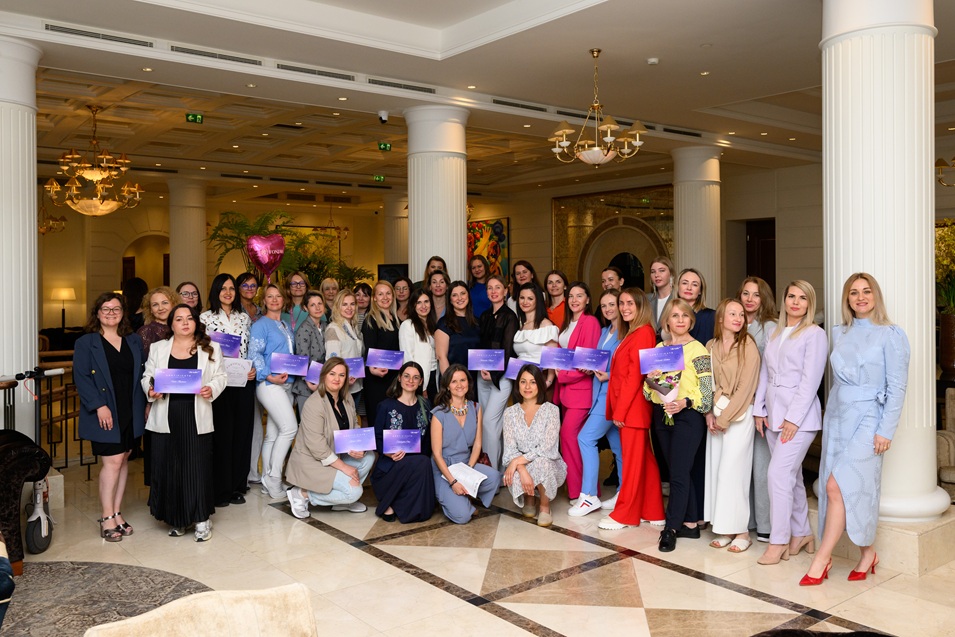
The programme provides participants not only with knowledge and skills, but also with access to a network of professional contacts and mentoring opportunities with successful entrepreneurs in Lithuania. Before starting the programme, a survey showed that half of the women who want to grow their businesses do not know other businesswomen; therefore, the programme aimed to ensure exposure to other female leaders.
Implementation of such a programme helps improve participants’ financial stability, which in turn reduces their vulnerability and dependence on low-paid, unqualified or unsatisfactory work. While the programme did not provide regular financial allowances, seed grants were awarded to the winner and finalists of the final pitching session, and financial and legal consultations were made available to all participants to support the sustainable development of their businesses. Through entrepreneurship, migrant women have the opportunity to realise their potential and contribute to the host country’s economy. Improving their economic situation helps restore social ties and integrate them into society, thereby positively affecting Lithuania’s socio-economic situation.
Programme results
The pilot programme for Ukrainian women entrepreneurs, implemented over a four-month period from March to June 2024, has demonstrated early signs of success. Of 28 participants, 7 women have already established new businesses or expanded existing ones, indicating the programme’s potential to support income-generating activities among displaced women.
As the programme concluded in June 2024, its long-term impact is yet to be assessed, while the medium-term outcomes are currently under evaluation. Nevertheless, the pilot implementation has generated valuable practical insights that have already been shared with relevant public institutions and partner organisations in Lithuania.
The pilot programme highlighted several key lessons that may inform the design of similar initiatives aimed at improving labour market integration and economic empowerment of displaced Ukrainian women:
- Flexible programme design, including a combination of online and in-person sessions and non-standard scheduling, is essential to enable participation of women with childcare responsibilities and full-time employment.
- Language accessibility plays a critical role, as delivering training in participants’ native language significantly reduces participation barriers and facilitates learning.
- Mentorship and peer networks are important in addressing professional isolation and strengthening participants’ confidence to pursue entrepreneurial pathways.
- Childcare support is a necessary condition for inclusive participation, without which a substantial share of potential beneficiaries would be excluded.
- Seed funding linked to a competitive pitching process supports the transition from training to concrete income-generating activities and enhances participants’ motivation.
- Financial and legal consultations available to all participants contribute to the sustainability and formalisation of newly established or expanded businesses.
Building on these lessons, plans to roll out a scaled-up version of the programme are currently in place to extend its reach and further strengthen the economic integration of displaced Ukrainian women in Lithuania.
Conclusions
The profile of Ukrainian women who participated in the entrepreneurship training programme by Ukreate Hub confirmed the existing challenges in successfully integrating into the local employment market and thus securing financial stability. Entrepreneurial training is an example of a gender-sensitive intervention that can facilitate smoother integration and economic independence for migrant women. Understanding the barriers faced by the target group helps design a programme that tackles most of those barriers, paving the way for success for all: the migrant, the host country, and, potentially, other migrants who can thrive following the success of others.
[1] Data received by official request.
References
Employment Service of Lithuania. (2023). Ukrainian Refugees Labour Market Integration Data.
EMN & OECD. (2023). Ukrainian Refugees and Labour Market Integration in the EU.
IOM. (2023). Displacement Tracking Matrix: Ukraine Response in Lithuania.
Ministry of Social Security and Labour. (2023). Employment and Tax Contributions of Ukrainians in Lithuania.
Ministry of Social Security and Labour. (2024). Updated Statistical Bulletin on Ukrainian Refugees.
OECD. (2023). Integration of Refugee Women into Labour Markets: Comparative Review.
UNHCR. (2023). Empowerment Through Entrepreneurship: Refugee Women’s Economic Inclusion Report.