Ukraine’s public diplomacy has rapidly developed from a long-term image-building effort into an instrument of national survival. Nadia Bureiko from the Foreign Policy Council “Ukrainian Prism” and HROMADA member Maryna Rabinovych trace this development, highlight current challenges, and draw lessons from it for other countries.
Over the last ten years, from a fragmented approach to projecting its image abroad, Ukraine has moved to a structured and adaptive system of public diplomacy that today is strategically embedded in the foreign policy framework. Understanding how Ukraine’s public diplomacy has evolved during the war and how it functions today is crucial for ongoing and future recovery efforts, as it helps engage a broader range of stakeholders and strengthen ownership of this process at national, regional, and local levels. Moreover, Ukraine’s experience of public diplomacy during wartime offers valuable insights for other countries in mobilizing diverse diplomatic capacities and increasing soft power during crises.
From limited visibility to global recognition
Since regaining independence in 1991, Ukraine has found itself in a soft-power vacuum, with the state mostly looking inward and doing very little to communicate with foreign audiences or disseminate Ukrainian narratives abroad. This resulted in the overall lack of knowledge of Ukraine abroad and stereotyped external perceptions, largely linked to the country’s Soviet past or framed through (pro)Russian perspectives.
Ukraine first became associated with democratic mobilization and European integration following the Orange Revolution in 2004. Yet, due to the lack of significant post-revolutionary progress and continuing political tensions, perceptions of Ukraine remained largely neutral or negative for some time.
It was thus primarily after the Euromaidan and the onset of Russian aggression that these perceptions began to shift more clearly in a positive direction, accompanied by stronger references to and interest in Ukrainian culture and history. In 2022, while Ukraine’s capacity to withstand Russia’s invasion was widely underestimated, with some predicting Kyiv would fall within a matter of days, Ukraine showed remarkable resilience and managed to rally unprecedented international support. This tenacity has, in turn, led to rapid growth in positive associations with Ukraine abroad, reflecting a less-discussed but rather consequential transformation: the rise of Ukraine’s public diplomacy as a strategic tool of wartime resilience.
Launching public diplomacy
Until 2015, Ukraine’s public diplomacy did not really exist as a structured policy field. Early efforts were limited to sporadic cultural initiatives, mostly driven by individual enthusiasm rather than any coordinated state strategy. In addition, the undertaken endeavours largely lacked financial support and continuity.
The first steps of public diplomacy initialisation in 2015 became a game changer. Within Ukraine’s MFA, the Department of Public Diplomacy was established, responsible for international communications, cultural diplomacy and outreach, that aimed at turning reactive communication to proactive international engagement. In the following years, new public institutions were launched in this domain, including the Ukrainian Institute, the Ukrainian Cultural Foundation, and the Ukrainian Book Institute.

These institutional developments marked an important shift from ad hoc initiatives to a more professional and coordinated approach. Although numerous challenges (e.g., institutional fragmentation, limited funding, and bureaucratic constraints) still existed, the post-Euromaidan developments were of huge significance for the public diplomacy system, which, with time, evolved into a much stronger and more coherent system.
The strategic turn
In 2021, Ukraine’s first Strategy of Public Diplomacy was adopted, which officially embedded public diplomacy into the country’s broader foreign policy toolkit. The document emphasised engagement with foreign audiences, the importance of dialogue, and the need for stronger coordination across institutions. It identified seven key areas (cultural, economic, expert, culinary, science and education, sports, and digital diplomacy) and highlighted the growing role of non-state actors, such as civil society, businesses, and diaspora.
Importantly, the strategy recognised the need for research and data to better understand how Ukraine is perceived abroad – identifying ‘ground zero’ first and then evaluating the effectiveness of communication efforts over time. This research-first orientation marked a shift toward a more evidence-based and strategic approach. Concurrently, clearer narratives were presented in order to shift perceptions of Ukraine from a post-Soviet state to a European modern and dynamic country with rich culture, creativity, innovations, strong investment and tourism potential.
Post-2022 transformations
The full-scale Russian invasion in 2022 posed new objectives for Ukraine’s public diplomacy – what had previously been designed for long-term image-building became an immediate instrument of survival.
In communication with foreign audiences, the focus has shifted towards a security-oriented narrative, and Ukraine has been first and foremost presented as a defender of democracy, international law, and stability. The war was framed not only as a national fight against the Russian aggression but as part of a broader confrontation between democratic and authoritarian systems. Campaigns such as Stand With Ukraine became worldwide symbols of solidarity that combine emotional appeal with a clear political message.
One of the most distinctive features of Ukraine’s wartime public diplomacy has been its efficient use of digital tools. Social media platforms gained the upper hand, becoming the main channel for communication, ensuring direct, real-time engagement between Ukrainian officials and non-governmental actors with global audiences. For instance, in 2025, the digital ecosystem of Ukraine.ua, which brings together Ukraine’s official social media accounts and web platforms, reached an audience of over 300 million digital contacts. The official fundraising platform UNITED24 has attracted a wide range of partners, including Balenciaga, Microsoft, Pandora, Visa and Uber, as well as celebrities who help raise global awareness of Russia’s aggression against Ukraine and contribute to securing various forms of support. The UNITED24 ambassadors include well-known actors, musicians, film directors, as well as scientists and experts (for instance, historian Timothy Snyder, political scientist Francis Fukuyama, and Nobel Prize winners in Physiology or Medicine Edvard and May-Britt Moser) who have increasingly become important contributors to Ukraine’s public diplomacy efforts, helping to strengthen its credibility and visibility.
The power of knowledge and expertise
Systematic mobilisation of knowledge and expert communities is another crucial, yet often underestimated dimension of Ukraine’s wartime public diplomacy.
For instance, through studies commissioned by the Ukrainian Institute, analytical and policy-oriented contributions from think tanks’ experts have directly informed Ukraine’s diplomatic priorities, including EU accession processes and sanctions policy. Initiatives such as the ‘Candidate Check’ and perception studies across key global regions have provided a foundation for evidence-based strategic decision-making. At the same time, expanded research networks and the Global Coalition of Ukrainian Studies have strengthened Ukraine’s international academic presence and increased the Ukrainian voices abroad.
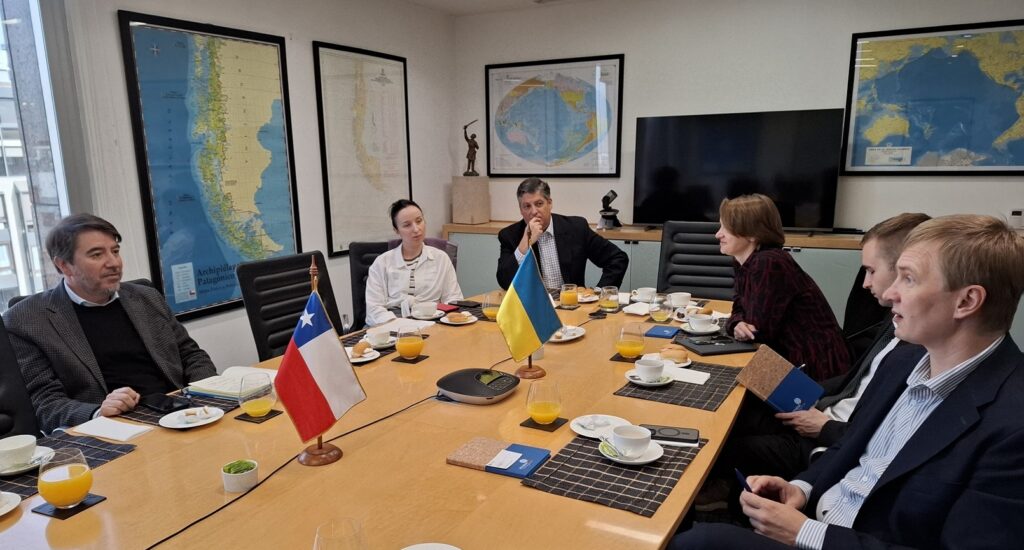
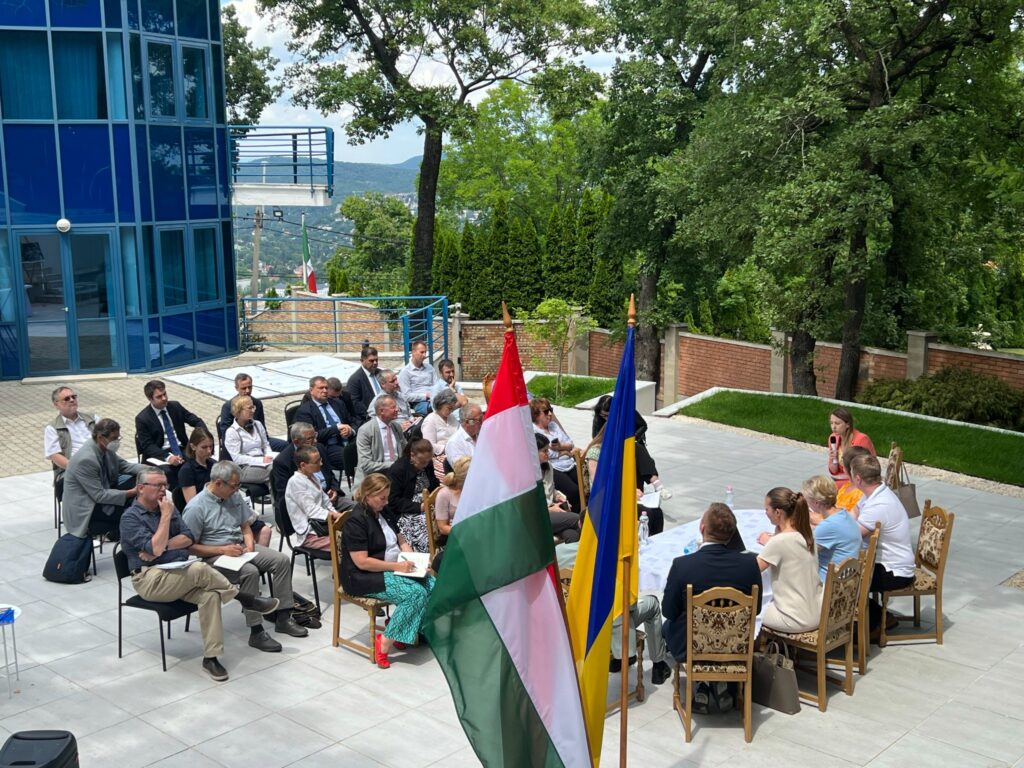
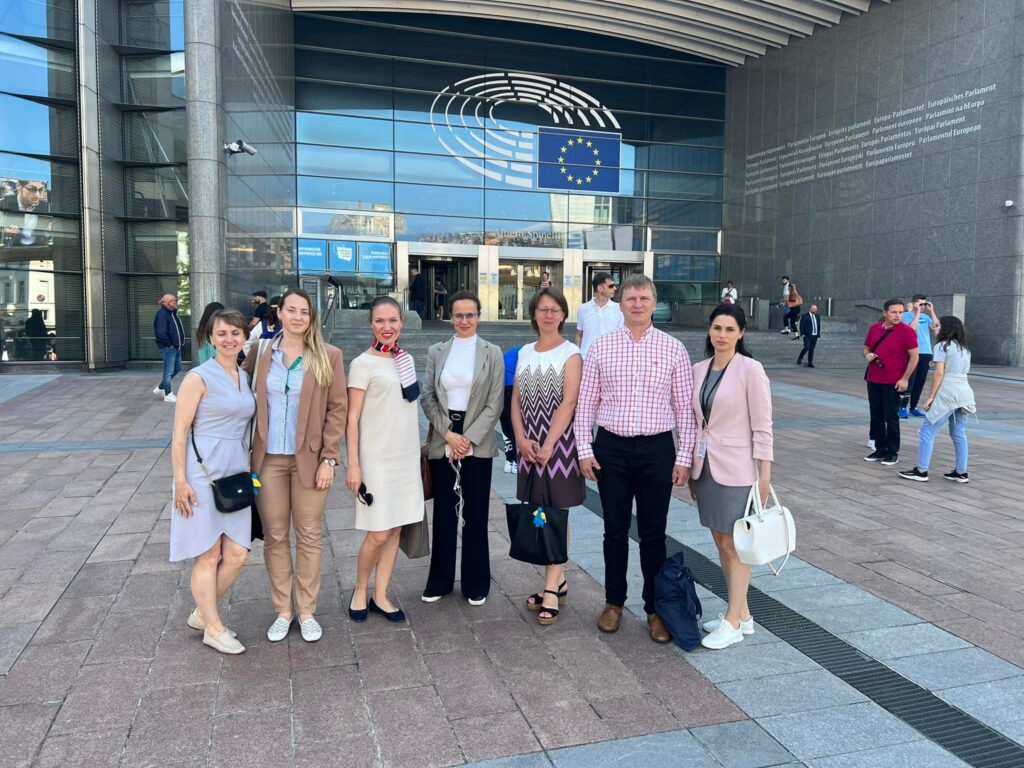
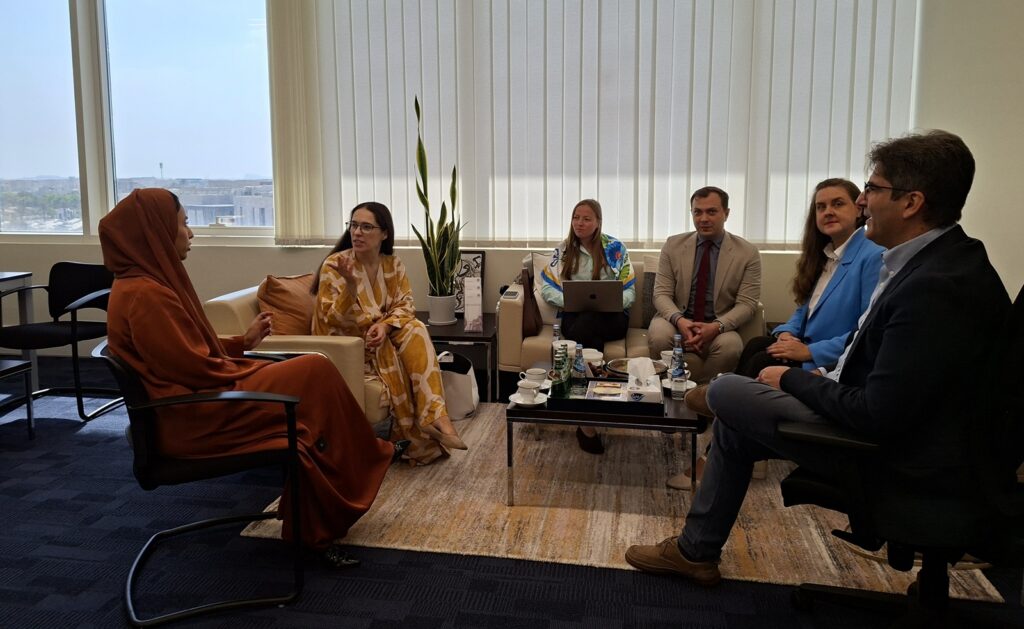
Ukraine’s experts and civil society communities also played an important role in Ukraine’s advocacy efforts. For instance, following Ukraine’s EU membership application, think tanks and NGOs such as Ukrainian Prism, the New Europe Centre, ANTS and the Anti-Corruption Action Centre organised advocacy tours in Brussels and EU member states to strengthen support for Ukraine’s candidate status. Advocacy efforts also extended beyond Europe, helping to broaden Ukraine’s diplomatic outreach.
Advocacy activities
Advocacy visit of Ukrainian experts to Budapest, June 2022, Brussels, June 2022, and Qatar University, October 2025.
Source: Foreign Policy Council ‘Ukrainian Prism’ archive
Geographical diversification
Ukraine’s public diplomacy has undergone a significant geographical diversification that corresponds to a broader shift in Ukraine’s foreign policy outreach. Traditionally focused on Euro-Atlantic partners, Ukraine has more actively engaged with the so-called Global South.
This shift reflects both necessity and strategy, but faces deep structural and discursive constraints that complicate Ukraine’s public diplomacy endeavours in the region. In many countries of Africa, Asia, and Latin America, Ukraine had a very limited presence, unlike Russia, which, drawing on historical ties, Soviet solidarity narratives, and long-standing networks, is often perceived not primarily as an aggressor state, but rather as a geopolitical counterweight to the West. Consequently, Ukraine cannot rely solely on normative or legal arguments centred on sovereignty and territorial integrity, although they remain central to its messaging. To more efficiently engage with region-specific historical and political experiences, strengthen existing partnerships and establish new ones, Ukraine expanded its diplomatic presence and developed tailored regional approaches towards the Global South, including the 2023 Communication Strategy towards African States and the 2024 Communication Strategy towards Latin America and the Caribbean, while also intensifying its cultural and expert diplomacy efforts.
Resilience under constraints
Ukraine’s public diplomacy was launched and developed under severe constraints, including limited funding, bureaucratic rigidity, and the pressures of the ongoing war. Yet, it showed remarkable adaptability, as institutions within the system of public diplomacy not only continued to operate but also significantly expanded their activities during wartime. This experience suggests that public diplomacy can play a meaningful role in the post-war recovery phase, particularly in attracting the attention of public actors and investors to emerging economic opportunities, also in close synergy with Ukraine’s European integration process. However, this resilience should not be taken for granted; sustained effort is required to further develop Ukraine’s public diplomacy capabilities, including financial resources and softer assets such as expertise, networks, and credibility. Lessons from both individual wartime public diplomacy cases and broader system-building efforts can provide valuable insights for countries seeking international support in times of crisis or aiming to reposition themselves on the international stage.
This text draws on discussions from the 2026 Workshop on Contemporary Ukrainian Politics, organized within the Petrach Program on Ukraine at George Washington University. The authors thank all the participants for their comments and Prof. Henry Hale for organising the event.