Under the conditions of war, universities in Ukraine are agents of social cohesion and reform. Using the example of the TURBO project, Veronika Vakulenko shows how building institutional resilience, expanding flexible learning opportunities through micro-credentials, and linking education to local labour markets can turn universities into engines of democratic reconstruction, even in times of social crisis.
The full-scale invasion has had a profound effect on every dimension of Ukrainian society. National resilience is being tested daily by extreme pressures, including intense military aggression, economic disruptions, energy shortages, political turbulence, and corruption scandals, to name just a few. The consequences of the war have weakened community ties, undermined citizen participation, and exacerbated existing inequalities, putting the already fragile social fabric of Ukrainian society in danger. Thus, keeping communities connected and maintaining trust in democratic institutions becomes crucial to prevent the fragmentation of social structures.
At a time when many public institutions face reduced functioning or severe resource constraints, higher education institutions (HEIs) retain physical and social presence across regions, interact directly with local communities and continue to deliver educational services. Understanding how Ukraine sustains democratic resilience requires examining the capacity of universities not only as educational providers but also as resilient institutions that adapt to crisis conditions and support society.
Ukrainian universities in times of crisis
The war has reshaped the Ukrainian higher education landscape in several ways.
Operational constraints on HEIs. Many institutions are coping with a loss of staff and students, budget reductions, damaged infrastructure, and reduced institutional stability. For example, a recent analysis notes that over the last four to five years, about one-fifth of academic and research staff have either left Ukraine or exited academia, signalling the risk of “brain drain”. According to a report on infrastructure damage by the Kyiv School of Economics, as of the end of 2024, nearly one in every four HEIs had been completely or partially destroyed. These conditions force universities to adapt to resource constraints and the security situation, and to rethink their teaching processes and governance.
Massive internal displacement and learner heterogeneity. As of October 2025, there are approximately 3.7 million internally displaced persons (IDPs) in Ukraine. Many IDPs are of working age, and they often cannot continue their former professions in new host regions. This disruption creates a demand for retraining, upskilling and psychosocial support. Traditional university programmes designed for young bachelor’s- and master’s-level students are ill-matched to mature learners aged 25–60, who bring diverse educational backgrounds and complex displacement experiences. Moreover, displaced persons often experience difficulties with employment and skill mismatches, which undermine human capital retention and social integration. Conversely, universities that create flexible, inclusive, and study offers relevant to the local labour market support inclusion, strengthen integration, and contribute to the rebuilding of the social fabric essential for Ukraine’s long-term reconstruction.
Universities as agents of social cohesion and reform. Under these pressures, HEIs are emerging not only as educational providers but as frontline institutions of social cohesion. Seeking to build inclusive learning environments and support IDPs’ reintegration into unfamiliar regional communities, they may collaborate with local stakeholders, including NGOs, businesses, and local authorities, to succeed in this process. At the same time, as Ukraine moves toward EU membership, universities must align their curricula with European standards by adopting learner-centred practices, promoting lifelong learning, digitising teaching, and ensuring that programmes match regional labour-market needs.
Such dual pressures, social crisis and structural reform, require HEIs to re-imagine their role to respond with agility and equity and thus become more resilient.
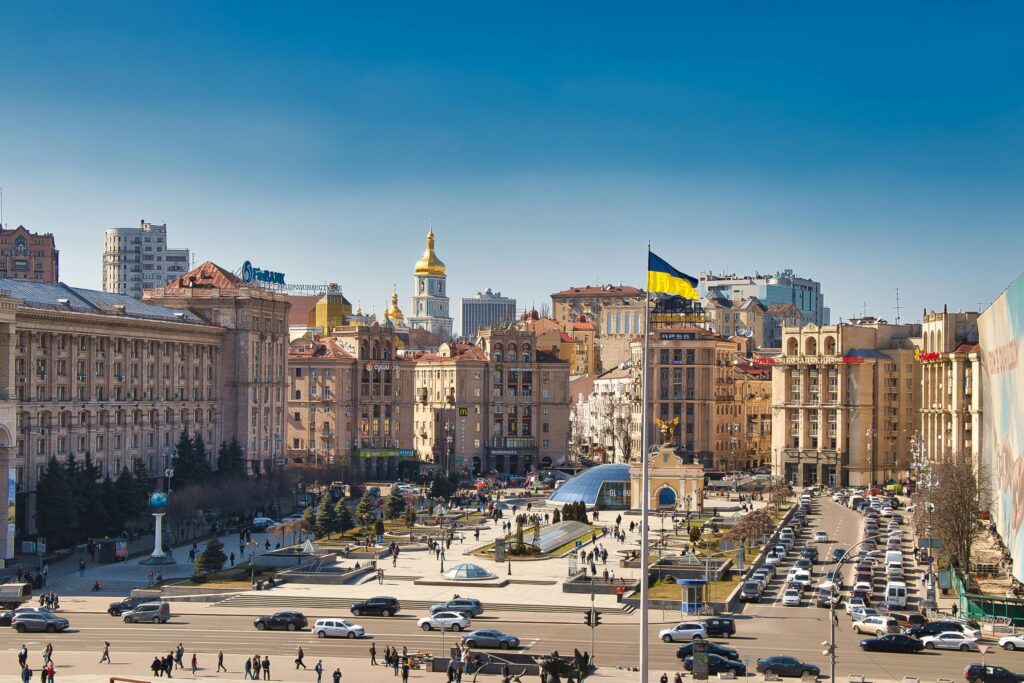
One example of this expanding role is The Universities’ Reaction to Big Obstructions: Building resilient higher education to respond and manage societal crises (TURBO) project (funded by the EU under grant agreement No. 101129315) for 2024–2026. By building institutional resilience, expanding flexible learning through micro-credentials, and connecting education with local labour markets, TURBO demonstrates how universities can function as engines of democratic reconstruction even amid societal crises.
Micro-credentials as tools for democratic reconstruction: Learning from the TURBO project
According to the European Commission, “a micro-credential is the record of the learning outcomes that a learner has acquired following a small volume of learning. Courses leading to micro-credentials are designed to provide the learner with specific knowledge, skills and competences that respond to societal, personal, cultural or labour market needs”.
Ukraine does not yet have an integrated national micro-credentials framework. While Ukrainian HEIs have experience providing short-term non-degree training, micro-credentials in the European sense remain a novel practice. There is growing policy interest, especially as Ukraine accelerates its integration with the European Higher Education Area and aligns with EU lifelong-learning strategies, but implementation remains uneven. TURBO therefore fills an important gap by building capacity in HEIs to design, test, and share experience on micro-credentials.
Micro-credentials enable universities to provide short, targeted learning pathways that efficiently retrain displaced professionals. This capability is especially important when many IDPs cannot commit to full degree programmes due to economic insecurity, care responsibilities or psychological stress. OECD analyses show that a large share of displaced adults in Ukraine requires targeted retraining to re-enter the labour market, with skill mismatches and interrupted career trajectories among the major obstacles to employment. Micro-credentials, therefore, offer an accessible mechanism for restoring livelihoods, an important component of democratic participation and social stability.
With around two years in progress, the TURBO project demonstrated the initial results of operationalising micro-credentials through several key innovations, each designed to address specific societal needs:
1. Co-production with non-academic partners.
Each programme is jointly developed with NGOs and local businesses. This model ensures that micro-credentials address real labour-market needs. NGOs contribute expertise in psychosocial support and social adaptation, while employers provide insight into regional economic trends and necessary competencies. This approach supports the idea of democratic governance by enabling decisions to be taken collaboratively, with multiple stakeholders shaping the educational offer based on actual societal needs.
2. Integration of psychosocial and employment support.
Recognising that IDPs frequently experience trauma, uncertainty, and loss of professional identity, TURBO programmes include psychological assistance, motivation-building, and job-search guidance. Psychosocial stability is considered a significant factor in enhancing participation in education and employment. By embedding such support within micro-credentials, Ukrainian project partner HEIs help restore not only professional skills but also social cohesion, an essential prerequisite for democratic engagement.
3. Digitalisation to ensure continuity and accessibility.
Given that many learners can relocate within and between regions, face irregular work schedules, or must combine study with care responsibilities, TURBO invested in digital learning tools, flexible formats, and accessible online platforms. This hybrid study model reduces inequalities by allowing participants to continue their studies despite energy shortages or mobility constraints.
Taken together, the experience with piloting TURBO programs demonstrates that micro-credentials can serve as instruments of democratic reconstruction. They support justice by widening access to education, resilience by enabling continuity during crisis, and participation by reconnecting displaced individuals with economic and civic life.
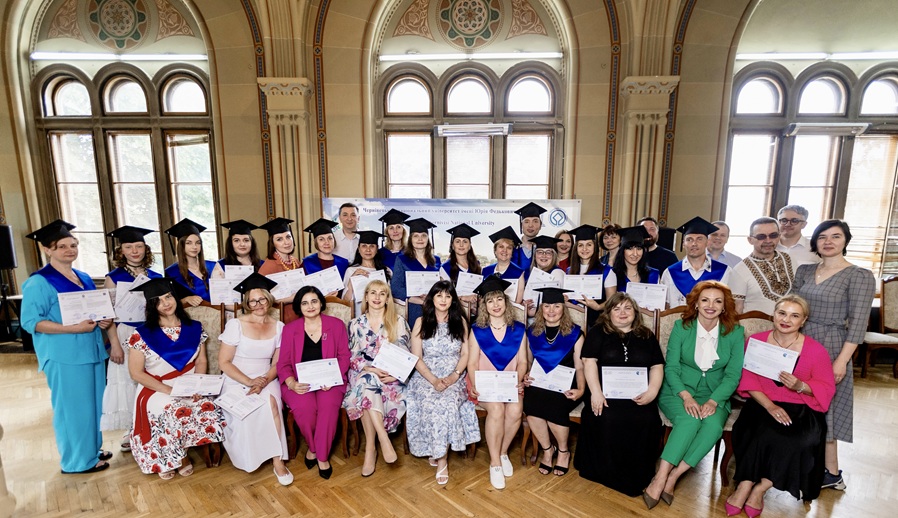
Photo by Anton Romaniuk
Conclusions and recommendations
In post-invasion Ukraine, higher education institutions have become crucial democratic actors. Beyond delivering academic programmes, they cultivate inclusive citizenship, reinforce democratic values, and offer pathways out of vulnerability for displaced and at-risk populations. The experience of the TURBO project shows how universities can restructure curricula, build new partnerships, and adapt organisational practices to respond to acute societal challenges. These changes advance three interconnected pillars of democratic reconstruction:
- Justice: When universities create equal access to retraining and labour-market participation, they reduce inequalities that undermine trust and democratic legitimacy.
- Resilience: Flexible, modular, and digital learning formats sustain educational continuity under crisis and help institutions remain reliable public anchors.
- Participation: co-creation and co-delivery of programs with NGOs, local governments and businesses ensures relevance, builds trust across stakeholders and fosters civic engagement.
Drawing from the Ukrainian experience and the TURBO project, the following lessons can guide Nordic–Baltic policymakers, universities, and cross-border initiatives:
- Recognise universities as democratic agents. Their ability to sustain public trust, support vulnerable groups, and anchor civil continuity makes them essential partners in crisis response and reconstruction.
- Develop crisis-responsive learning pathways. Nordic–Baltic HEIs can adapt Ukrainian innovations, such as flexible scheduling, modular learning, and adult-learner-oriented practices, to serve increasingly diverse student populations.
- Use micro-credentials for labour-market integration. When co-produced with local businesses, NGOs, and local authorities, micro-credentials can reduce inequality and ease transitions for displaced, migrant, or other vulnerable groups.
- Importance of psychosocial support. Ukrainian HEIs show that wellbeing and democratic participation are linked; support structures should be embedded in lifelong-learning strategies and adult education programmes.
- Learn from the Ukrainian experience in teaching heterogeneous, displaced learners. This expertise will become increasingly relevant across Europe due to demographic shifts, migration, and labour-market volatility.
- Support capacity-building projects like TURBO. Such initiatives build institutional resilience, promote EU alignment, and foster shared democratic values across the region.
Ukrainian universities demonstrate that democratic reconstruction depends not only on ceasefire agreements but also on an early response to the needs of millions. Providing professional retraining and social adaptation to IDPs helps them rebuild their futures, as universities and NGOs collaborate, committed to inclusion, justice, and resilience. Nordic–Baltic countries have much to learn from this experience and much to contribute to shaping a shared democratic and educational space for Europe’s future.